
Many riders choose motorcycle gloves based only on S, M, or L, but proper fit depends on more than a size label. Hand circumference, finger length, glove construction, and material all affect comfort, control, and protection on the road.
A glove that is too loose can reduce grip and feel bulky, while one that is too tight can limit movement and cause discomfort during longer rides.
In this guide, you will learn how to measure for motorcycle gloves correctly and understand how should motorcycle gloves fit for different riding needs, so you can choose a pair that feels secure, comfortable, and ready for real-world riding.
Why Proper Motorcycle Glove Fit Matters
Better control and grip on the bars
A properly fitted motorcycle glove helps you maintain better control of the handlebars, throttle, brake, and clutch.
If the gloves are too loose, excess material in the palm and fingers can reduce grip accuracy and make your hand movements feel less precise. If they are too tight, they can restrict finger movement, create pressure points, and cause hand fatigue more quickly.
For both daily riding and longer trips, the right fit improves control, comfort, and confidence.
Comfort and protection work together
Good motorcycle glove fit is not only about comfort. It also affects how well the protective features work during riding. When gloves fit correctly, knuckle protectors, palm reinforcements, and padded areas stay in the right position instead of shifting around. A proper fit also helps reduce bunching, rubbing, and pressure during long rides. This means the gloves feel more natural on your hands while still giving you the protection they are designed to provide.
How to Measure for Motorcycle Gloves Step by Step

Step 1 – Measure hand circumference
Start by measuring the circumference of your hand, which is usually the most important number for choosing motorcycle glove size.
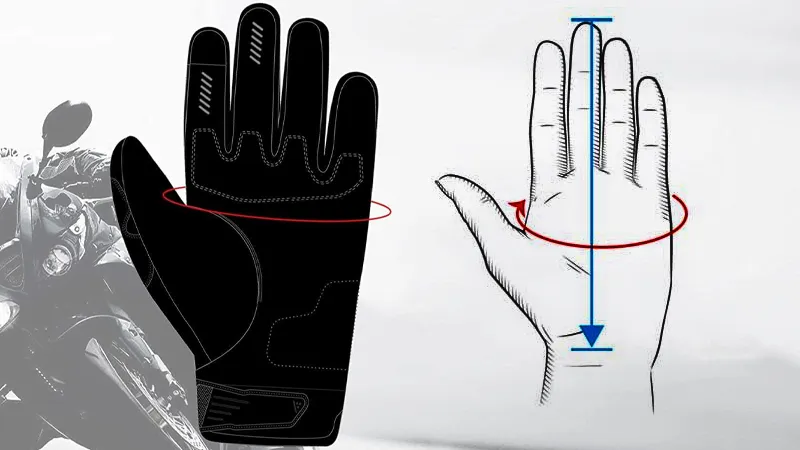
Wrap a soft measuring tape around the widest part of your palm, just below the knuckles, and do not include the thumb. Keep your hand relaxed and the tape snug against the skin, but do not pull it tight.
If you do not have a measuring tape, you can use a piece of string and then measure it with a ruler. For better accuracy, measure your dominant hand and repeat the process two or three times.

Step 2 – Measure hand length
Next, measure the length of your hand from the tip of your middle finger down to the base of your palm or the wrist connection area, depending on the sizing method used by the brand. This second measurement is helpful because hand circumference alone does not always tell the full story.
Some riders have wider palms with shorter fingers, while others have narrower hands with longer fingers. Checking hand length helps you choose gloves that fit both the palm and the finger area more comfortably.
Step 3 – Write down both measurements
After measuring, write down both numbers clearly. It is a good idea to record them in both centimeters and inches, since different motorcycle glove brands may use different units in their sizing charts.
Keeping both measurements ready makes it easier to compare products across brands and avoid confusion when shopping online. This small step can save time and help reduce the chance of ordering the wrong size.
Step 4 – Compare with the brand’s size chart
Once you have your hand circumference and hand length, compare them with the specific size chart provided by the glove brand. Do not assume that one brand’s medium is the same as another brand’s medium. Some brands use letter sizes such as S, M, and L, while others use number sizing, and the measurements behind them can vary. Always follow the brand’s own chart first, then use hand length as a secondary check if you are between sizes or unsure about finger fit.
How Should Motorcycle Gloves Fit?

Snug, but not too tight
Motorcycle gloves should fit snugly so they feel secure and responsive on your hands, but they should never feel overly tight or restrictive. A proper fit should allow you to bend your fingers naturally, operate the controls easily, and maintain comfort during longer rides. If the gloves feel too tight across the knuckles, palm, or fingers, they may cause pressure points, discomfort, or hand fatigue. The goal is a close fit that supports control and protection without limiting movement.
Your fingertips should not be jammed
Your fingertips should reach near the ends of the gloves, but they should not be pressed tightly into the tip. When you close your hand around the handlebars or make a fist, your fingers should still have a small amount of natural room to move. At the same time, there should not be too much empty space at the fingertips, because extra space can reduce control and make the gloves feel awkward while riding.
No bunching in the palm
A good pair of motorcycle gloves should sit smoothly across the palm without excess material bunching up. Too much loose material in the palm can affect grip feel, reduce handlebar feedback, and become uncomfortable over time. This is especially important on longer rides, where constant friction or folding in the palm area can create irritation and reduce control.
Protection should stay in place
Motorcycle gloves should fit in a way that keeps the protective features in the correct position. Knuckle protectors, palm sliders, and reinforced padding should align with the parts of your hand they are designed to protect. When you grip the handlebars, these protective areas should stay stable instead of shifting around. If the armor moves too much, the gloves may not provide the fit or protection you need.
What If You Are Between Two Sizes?
Check material first
If you are between two sizes, start by looking at the glove material. Leather motorcycle gloves often break in and stretch slightly over time, so a closer fit is usually the better choice. Synthetic materials, on the other hand, tend to keep their original shape more consistently, which means sizing up may be safer if the fit already feels tight.
Consider glove type
Glove style also matters. Racing gloves usually work best with a snug, performance-focused fit for better control and protection. Urban, touring, or winter gloves may need a little extra room, especially if they include a thicker lining, waterproof membrane, or insulation layer.
General rule
In general, choose the smaller size for leather gloves if the fit is close but comfortable. Choose the larger size if the gloves have heavy lining, cold-weather padding, or extra internal layers that reduce usable space.
Conclusion
Learning how to measure for motorcycle gloves is not complicated, but choosing the right size requires more than simply picking S, M, or L. By checking both hand circumference and hand length, then comparing your numbers with the brand’s size chart, you can make a much more accurate choice.
If you are still wondering how should motorcycle gloves fit, remember this simple rule: they should feel snug, secure, and comfortable without restricting movement. The right fit improves control, comfort, and protection every time you ride.